Hyperbaric Oxygen Therapy for the Brain and Nervous System
We offer you a thorough assessment, modern technology and individually tailored rehabilitation where hyperbaric oxygen therapy can provide more energy, a clearer mind and better function, and slow down the negative development of symptoms.

Contact us
Fill out the contact form or contact us directly by email.
Or call us at:
Visiting address:
Brain Camp
Vestre Strandgate 42
5th floor
4612 Kristiansand
Norway
Are the invisible symptoms draining you of your energy in everyday life?
In neurological disease and injury, reduced oxygen supply to brain tissue is an often underestimated contributor that both causes and worsens motor and non-motor symptoms.
When cells receive too little oxygen, energy production in the mitochondria weakens, blood flow is reduced and inflammation can increase, which affects everything from balance, coordination and responsiveness to concentration, memory and energy.
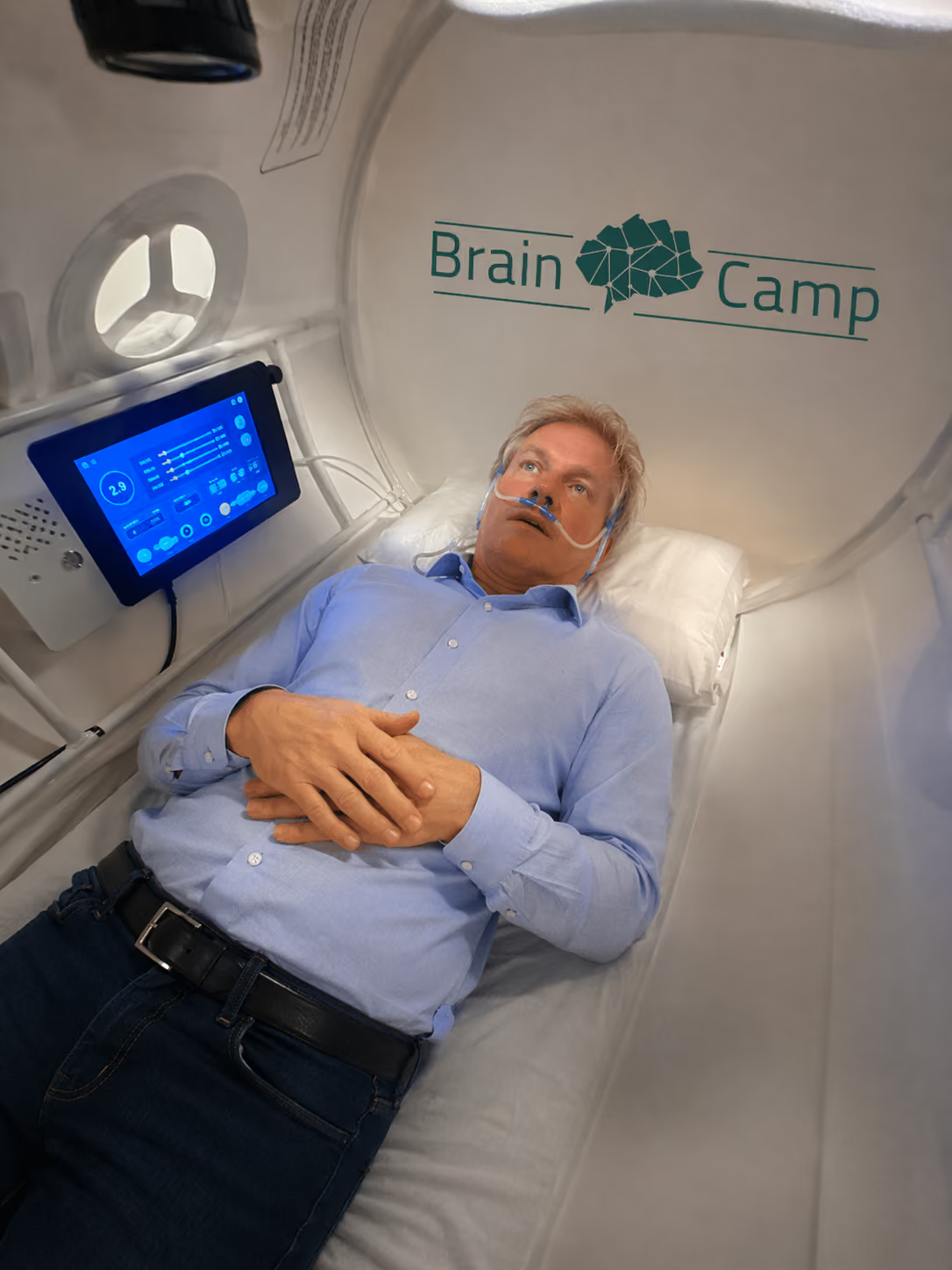
Hyperbaric oxygen therapy (HBOT) exposes the body to increased oxygen supply under elevated pressure in a pressure chamber, so that far more oxygen is dissolved in the blood and transported to the body's tissues, including the brain.
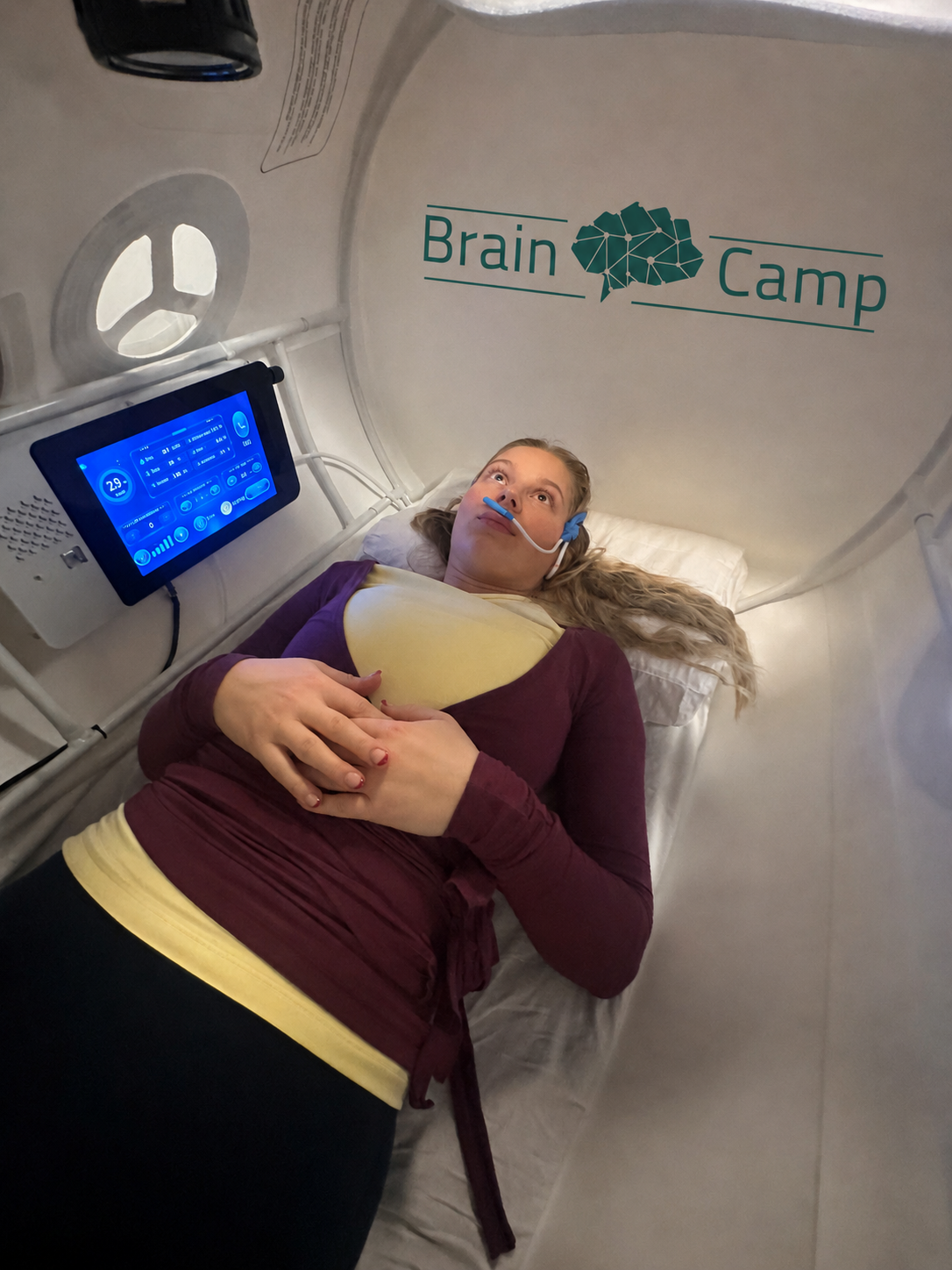
This can contribute to increased energy production, improved blood flow, reduced inflammation and stimulation of neuroplasticity, the brain's ability to adapt and improve its own function.
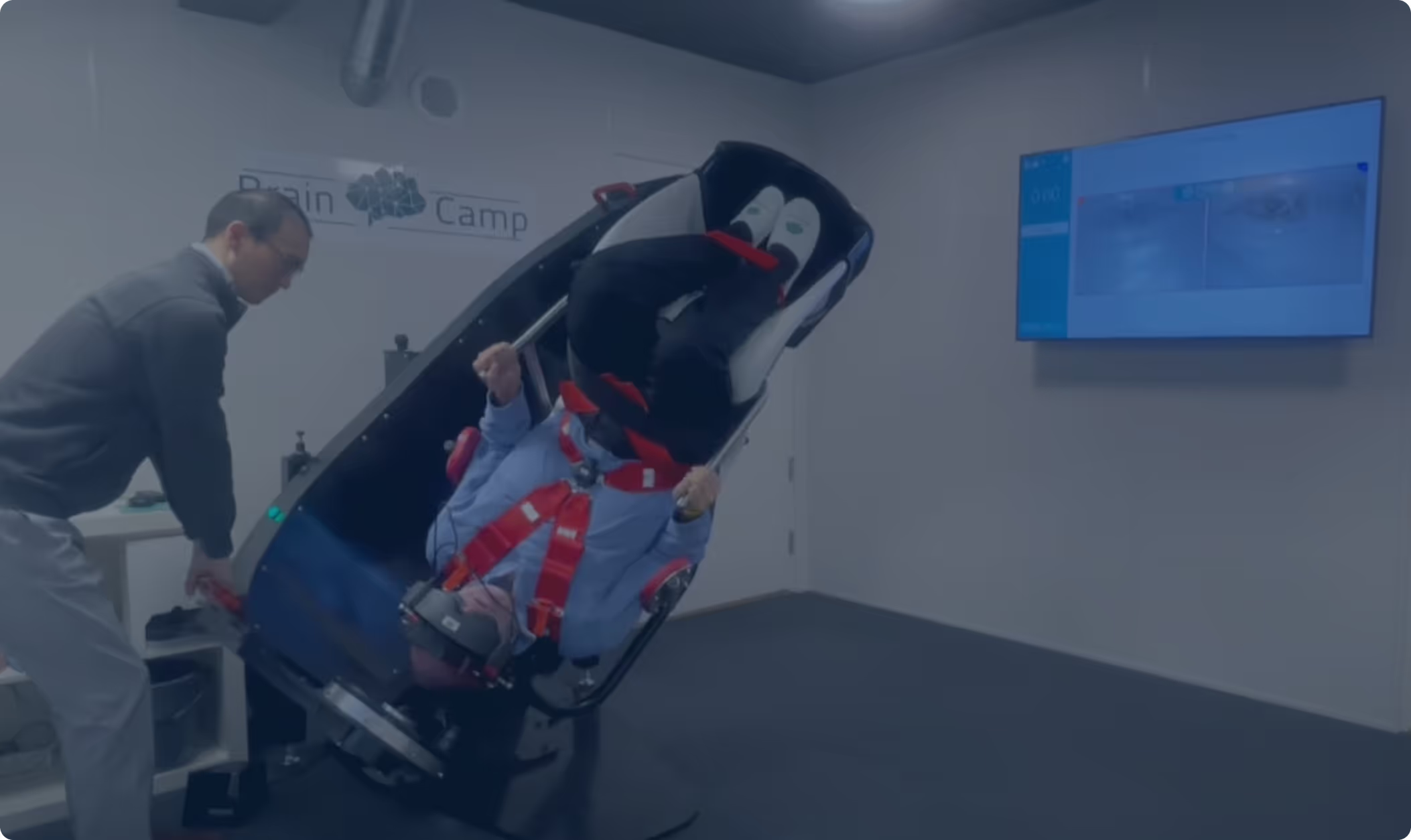
At Brain Camp, we objectively assess your condition with advanced computer equipment and incorporate HBOT into a comprehensive, tailored rehabilitation program. The goal is to improve function and slow the negative progression of symptoms.

"I came to Kim Tore Johansen with unpleasant dizziness. I have been treated 5 times and am practically completely healthy again . I have not been away from work and after the first time the discomfort was much less."

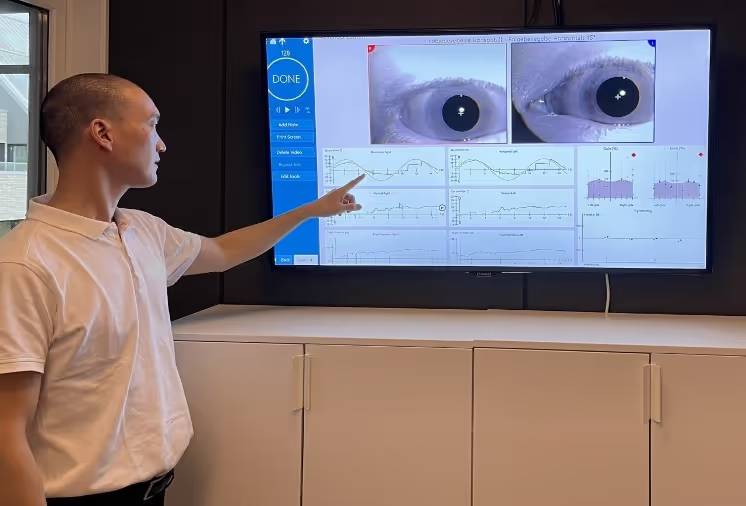
We offer comprehensive and thorough assessments to identify brain function challenges, including computer-based tests that objectively measure the function of the brain and nervous system.
A comprehensive and thorough assessment is conducted to assess and understand your condition, and to determine if hyperbaric oxygen therapy is right for you.
You will receive hyperbaric oxygen treatment in addition to tailored neurological rehabilitation as a comprehensive treatment plan.
When re-testing shows improvement, you will receive thorough training on how to do the exercises yourself for a period of time. During the period you work with home exercises, we can set up a plan for continuous treatment with HBOT.
We will follow you closely during the period of exercises at home, before you return for a new re-test to assess whether you are ready for the next phase of rehabilitation.

What makes us unique?
How we help you
A comprehensive and thorough assessment using advanced computer-based equipment is required to identify which parts of the brain and nervous system have the greatest functional challenges. This provides an understanding of where to prioritize first to get the best possible effect from treatment.
Hyperbaric oxygen therapy works through increased oxygen supply and improved blood flow, and can affect several areas of the brain, from the prefrontal cortex and parietal lobe, which control attention, orientation and balance, to the cerebellum and brainstem, which are central to coordination, timing and regulation of the autonomic nervous system.
By measuring these functions objectively, both before and after treatment, we can customize and document the effect of your rehabilitation.
QEEG
Maps the brain's electrical activity and reveals which areas are functioning optimally and which have reduced function
Computerized Measurement of Eye-Hand Coordination
Measures precision and interaction between vision and movement, central to responsiveness and motor control.
Computerized Balance Measurement
Objective measurement of postural control and balance, which are often impaired by neurological disease and injury
vHIT
Tests the function of the vestibular system and the interaction between the inner ear and gaze control
Saccadometry
Measures the brain's ability to make rapid, precise eye movements, an important marker of neurological function.
Videonystagmography (VNG)
Maps eye movements and balance function to detect vestibular and central disorders.
Our therapists
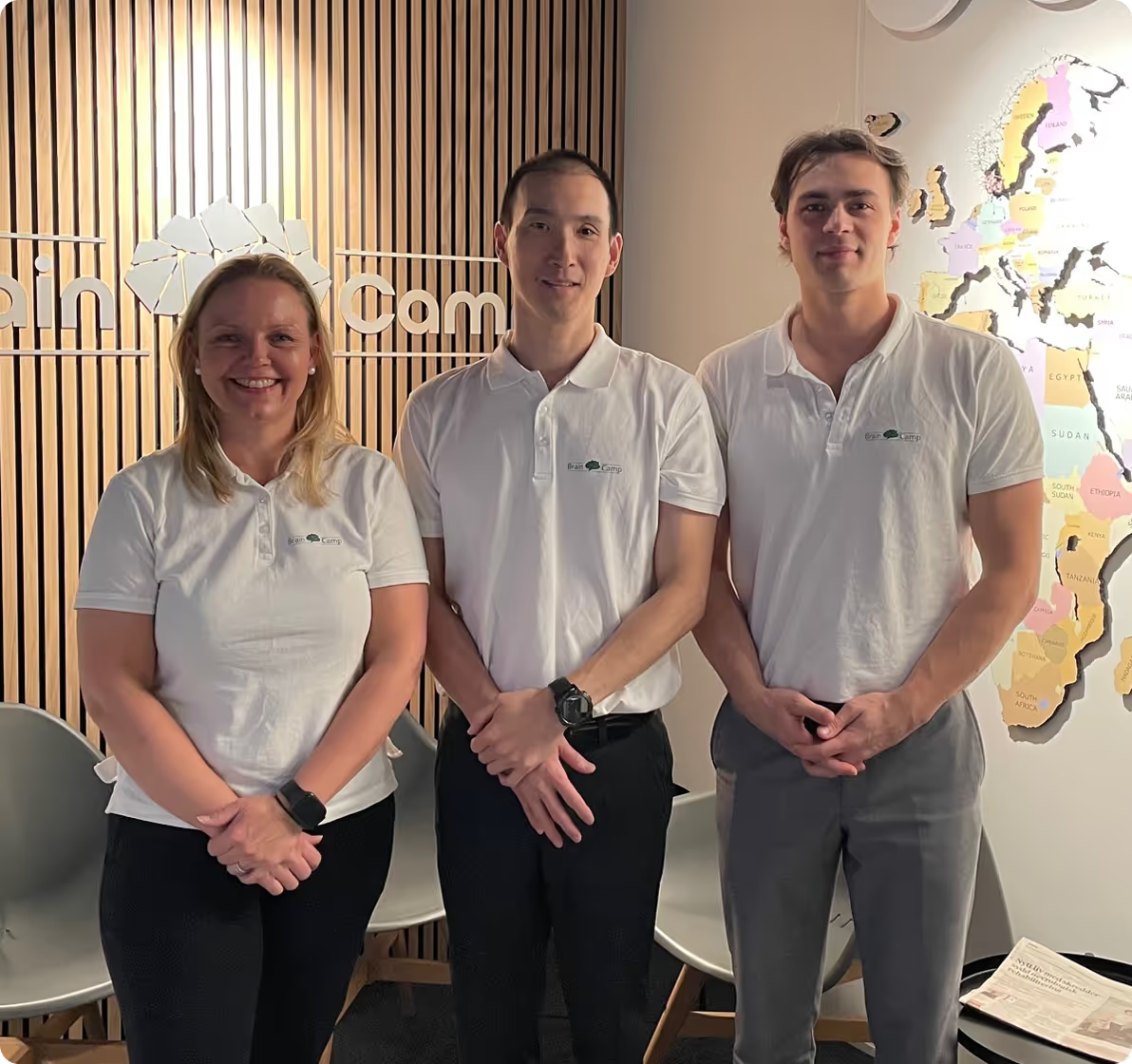
Brain Camp has extensive experience in examining and adapting rehabilitation for children and adults with disorders resulting from neurological disease and acquired brain injury. We base our approach on the latest neuroscience research and use advanced computer-based equipment to detect functional disorders of the brain and nervous system.
Frequently asked questions about hyperbaric oxygen therapy
Denne prisen gjelder for dem som ikke er pasient hos oss fra før
Påfølgende enkelt behandling a 60 min: 850kr
Man kan kjøpe mer tid per sesjon, 150kr tillegg per 15 min. Opp mot 90 min per sesjon.
Ved kjøp av klipper kort. Første 10 klipp koster 6500kr, hver sesjon 60 min. Tilsvarer 650 kr per sesjon.
Ved utvidelse av klippekort koster påfølgende 10 klipp 5500kr, hver sesjon 60 min. Tilsvarer 550 kr per sesjon.
Monday morning we start with a thorough examination to map out the functional disorders of the nervous system and brain, followed by a thorough review of what your examination shows. Including a review of findings from the computer-based tests that show how the brain and nervous system function.
If you are accompanied by a close relative, we always recommend that the relative joins us when we review the findings. Relatives find this very useful in gaining a better understanding of your health situation. If you are not accompanied by a close relative, but your close relative is still interested in having your findings reviewed, the relative can join you via video call. You will then have a 1 ½ hour break before we start your first treatment, which lasts 30-40 minutes.
Your treatment will continue on Tuesday morning followed by the first re-test which includes, among other things, the various computer-based tests to confirm whether the brain and nervous system are responding as expected. In many cases, it is seen that the brain and nervous system are incorrectly compensating, and several tests become worse. Then we have to change and fine-tune the treatment program and then re-test again after 2-3 treatments on the same day or the next day. These re-tests are the key to being able to tailor your neurological rehabilitation. This process continues throughout the week until we have identified the most effective treatment program that affects your brain and nervous system in the best possible way, and gives you the best possible potential to improve symptoms and quality of life.
On Friday, we dedicate 3 sessions to teaching you how to perform the tailored home exercises on your own. If you need help performing the exercises, your travel companion will also receive thorough training on how to perform the exercises. This includes both written instructions and video instructions on how to perform the home exercises 3-5 days a week, with 1-2 sessions per day lasting anywhere from 5 minutes to 30 minutes.
Friday ends with a new re-test and re-evaluation to get a final evaluation of how the home exercises affect the brain and nervous system. We then have a good foundation to create a customized rehabilitation plan for the next 3-5 months before you should come back for a new rehabilitation stay. This is not the last day of treatment, but the start of a customized rehabilitation plan and close cooperation.
Includes close follow-up via email or phone during the first few weeks to ensure the best possible effect. There may then be a period of 8-10 months between the second and third rehabilitation stays. Learn more about rehabilitation stays
For those who have the opportunity, we recommend that your closest relatives join you when we review your findings. Relatives find this very helpful in gaining a better understanding of your health situation.
We then create a tailored rehabilitation plan for the first 3 treatments lasting 30-40 minutes per session, followed by a re-test/re-evaluation immediately after the third treatment.
Re-testing includes, among other things, the various computer-based tests to confirm whether your brain and nervous system are responding as expected. In many cases, it is seen that the brain and nervous system incorrectly compensate, and several tests become worse. Then we have to change and fine-tune the treatment and exercises and then re-test again after 2-3 treatments.
When re-tests show satisfactory changes, we create customized home exercises based on the treatment plan that best improves your tests.
The home exercises are performed 3-5 days a week, with 1-2 sessions per day lasting anywhere from 5 minutes to 30 minutes.
The patient works on the exercises themselves for 4-6 weeks before we re-test/re-evaluate to see if we can upgrade the rehabilitation plan.
However, the plan often needs to be further fine-tuned when you return home and start your home exercises in combination with your regular everyday activities. We will then closely monitor your progress by changing the amount and intensity of your home exercises, as well as adjusting your general activity level over the course of a day and week.
In most cases, following up via email is sufficient, but in some cases we need to arrange a telephone or video consultation to get enough information to further tailor the rehabilitation plan. Even if you go home and work on exercises on your own, you are not alone. We will follow you closely.
Contact us
Fill out the contact form or contact us directly by email.
Or call us at:
Visiting address:
Brain Camp
Vestre Strandgate 42
5th floor
4612 Kristiansand
Norway
Sign up for our newsletter
Check the information you are interested in so that we can send you customized information and news.