Photobiomodulation Therapy (PBM)
Light-based, non-invasive stimulation of brain cells. PBM uses red and near-infrared light to increase cells' energy production, improve blood flow, and enhance neuroplasticity.


What is photobiomodulation?
Light that awakens brain cells
Photobiomodulation therapy (PBM) is an advanced, non-invasive treatment method that uses specific wavelengths of red and near-infrared light to stimulate brain cells. Brain Camp uses the most advanced PBM equipment – the Vielight Neuro Pro 2 – which stimulates with high-efficiency LED diodes with laser properties. It reaches as deep into the brain as lasers, but without the risk of overheating nerve cells or eye damage.
PBM affects the cells' energy production by stimulating mitochondria - the cells' energy centers. This can lead to increased production of ATP (adenosine triphosphate), which is essential for normal nerve cell function. At the same time, PBM can contribute to better blood flow, reduced inflammation and increased neuroplasticity.
Research shows that PBM stimulation over multiple areas of the brain simultaneously, with frequencies adapted to the different parts, can improve cognitive and executive functions, reaction time, coordination, muscle stiffness and spasm, and emotional balance, among other things. This makes PBM an important component of our tailored neurological rehabilitation plan.
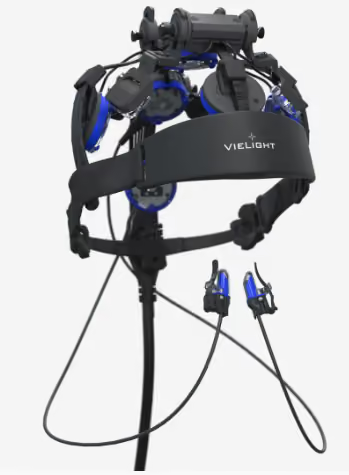
Vielight Neuro Pro 2 stimulates multiple areas of the brain simultaneously with customized frequencies – as deep as laser, but safe for nerve cells and eyes.
How it works
How PBM affects brain cells
PBM works primarily by affecting cytochrome c oxidase, an enzyme in the mitochondria that plays a key role in the cell's energy production. When light is absorbed by this enzyme, it can lead to:
- Increased ATP production
- Improved oxygen supply to cells
- Reduced oxidative stress
- Increased production of neurotrophic factors
- Stimulating neuroplasticity
These processes help nerve cells function more efficiently and communicate better with each other. The key to good effect is to be able to stimulate deeply in several areas at the same time with the right frequency. In neurological diseases and injuries, energy production in nerve cells can be reduced, PBM can help improve this function and support the brain's ability to repair itself.
Symptoms
Which symptoms can be improved?
PBM can help improve several symptoms associated with reduced brain function. Common symptoms include:
Attention
Concentration
Memory
Reactivity (physical and mental)
Fatigue and brain fatigue
Brain fog
High sensitivity to sensory input
Balance
Coordination
Muscle stiffness/spasm
Emotional balance
Sleep
Stress
Areas of application
What diseases and conditions can be affected?
PBM is increasingly used for several neurological conditions, including:
Concussion and PCS
Parkinson's disease
Multiple sclerosis (MS)
Chronic dizziness
Traumatic brain injury
ADHD
Autism spectrum disorders
Dyslexia
Stroke
Long-COVID
Area of the brain
What parts of the brain are affected?
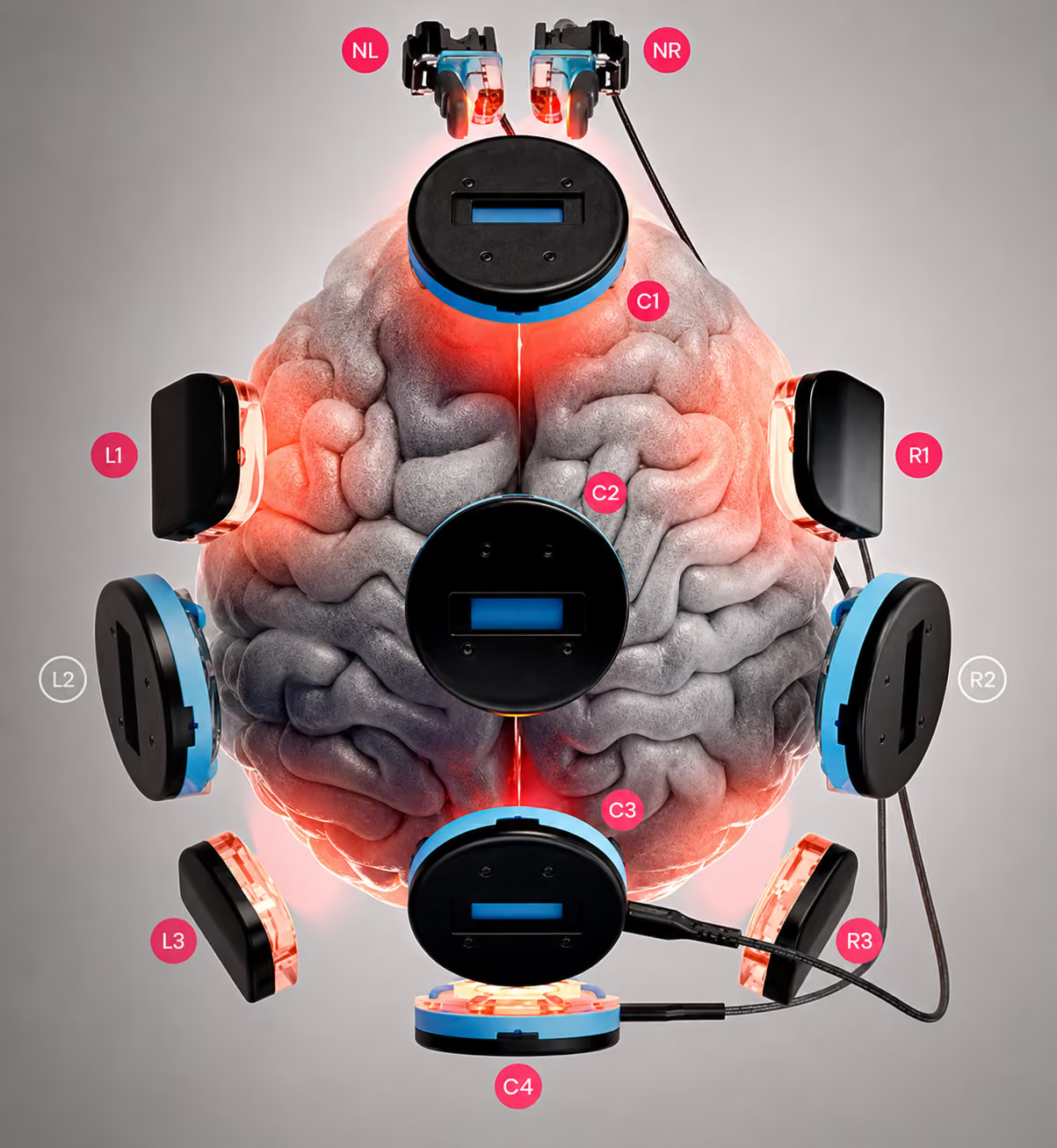
PBM affects multiple areas of the brain, depending on the placement of the applicators. Key areas include:
Prefrontal cortex
Central to attention, decision-making, planning, and working memory. Stimulation can contribute to improved cognitive capacity and a better ability to handle complex tasks.
Parietal lobe
Contributes to spatial orientation, body recognition and coordination. Stimulation can improve body control and precision in movements.
Temporal lobe
Important for memory, language comprehension, and sensory processing. PBM can contribute to better information processing and learning.
Cerebellum (cerebellum)
Central to coordination, timing, and balance. Stimulating associated networks can improve motor control and responsiveness.
Brainstem & autonomic centers
PBM can indirectly affect structures in the brainstem that regulate breathing, pulse and autonomic balance – and thus contribute to better regulation of the autonomic nervous system.
Effect on regulation, movement and cognition
Once the mapping is complete, a training program is developed that stimulates the areas of the brain that need improvement. The training may consist of several methods that work together:
Sensory & motor
Can improve communication between sensory and motor networks and contribute to better balance, improved coordination, faster reaction time and more precise movements – via improved function in the cerebellum and parietal networks.
Cognitive
Can improve attention, working memory, problem solving, decision-making and mental flexibility – and thus better multitasking and information processing. Especially important for brain fog, mental fatigue and difficulty concentrating.
Multisensory integration
Better interaction between senses and movement
Multisensory integration is the ability to combine information from multiple senses simultaneously. The key to good effects of PBM is to stimulate deeply in multiple areas of the brain simultaneously at the right frequency, which can contribute to:
Better multitasking
Increased mental capacity
Better stress management
Faster recovery
Improved responsiveness
Faster and more precise
Increased tolerance
More profit for activity
An integral part of rehabilitation
At Brain Camp, PBM is used as an integrated part of a comprehensive rehabilitation program.
PBM is often combined with:
Multisensory training
Coordination training
Balance and reaction training
The combination can enhance the effects of training by making the brain more receptive to learning and adaptation.
Want to find out if photobio-modulation can help you?
Are you experiencing fatigue, dizziness or reduced mental capacity? At Brain Camp, modern technology and research-based methods are used to stimulate the brain and support its ability to adapt and improve function – an important step towards better energy, stability and cognitive capacity in everyday life.