Vestibular rehabilitation therapy (VRT)
Research-based neurological training that strengthens the brain's ability to stabilize vision, coordinate movements and maintain balance.

What is VRT?
Exercise that teaches the brain to maintain balance
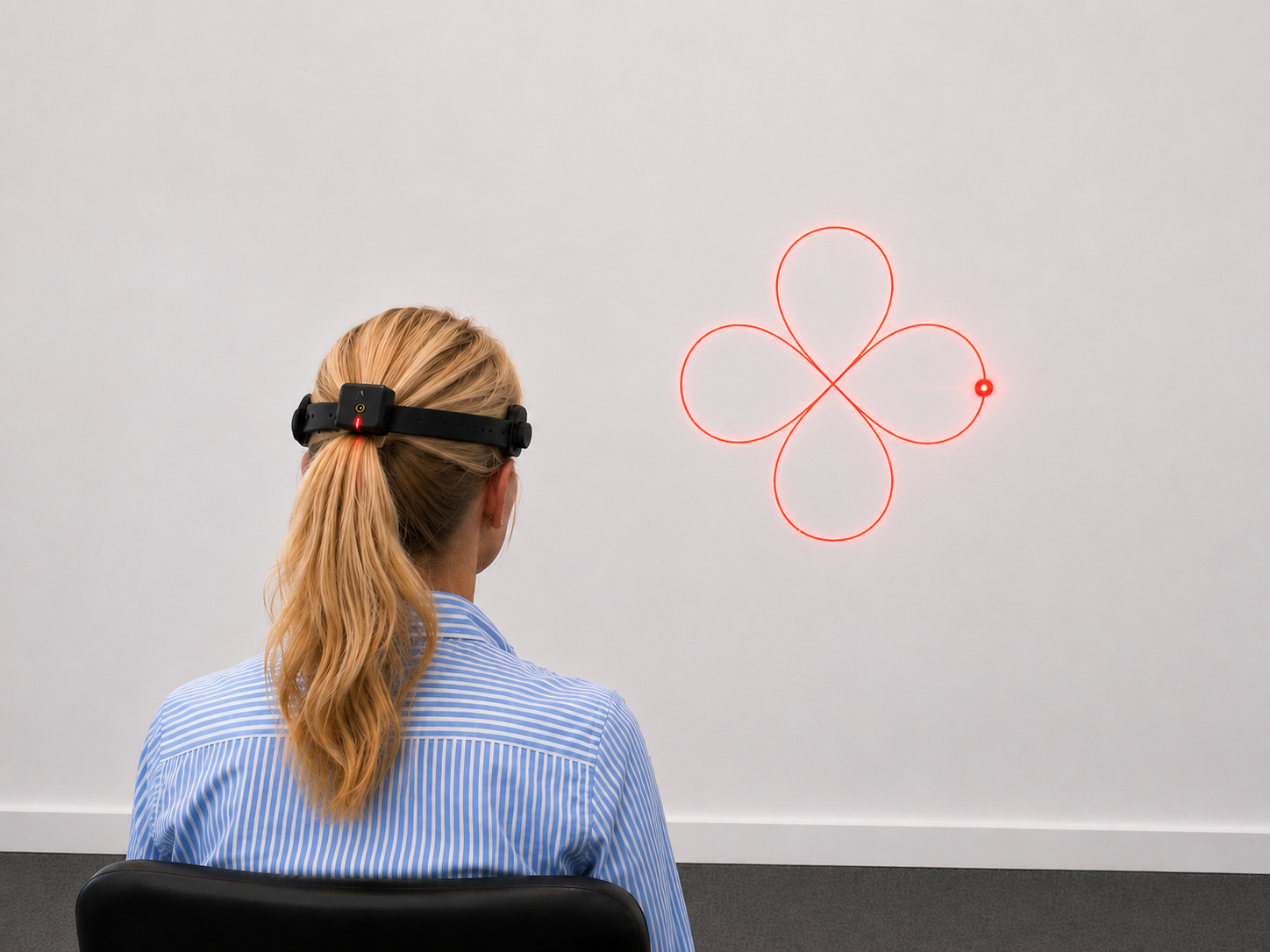
Vestibular rehabilitation therapy (VRT) is a form of neurological training that aims to improve the brain's ability to stabilize vision, coordinate movements, and maintain balance. The therapy consists of targeted exercises that challenge the cooperation between vision, balance organs, and the body's senses.
During VRT, exercises are performed that train gaze stabilization, balance, coordination, and responsiveness, often combined with head and body movements. The exercises may include tasks where the gaze is held steady on a target while the head is moved, or where the body must react quickly to changes in surface or direction.
Research in recent years shows that VRT is one of the most effective non-drug treatments for people with dizziness, balance problems and neurological dysfunction. The therapy works by stimulating the brain's ability to reorganize and strengthen communication between different networks - a process known as neuroplasticity.
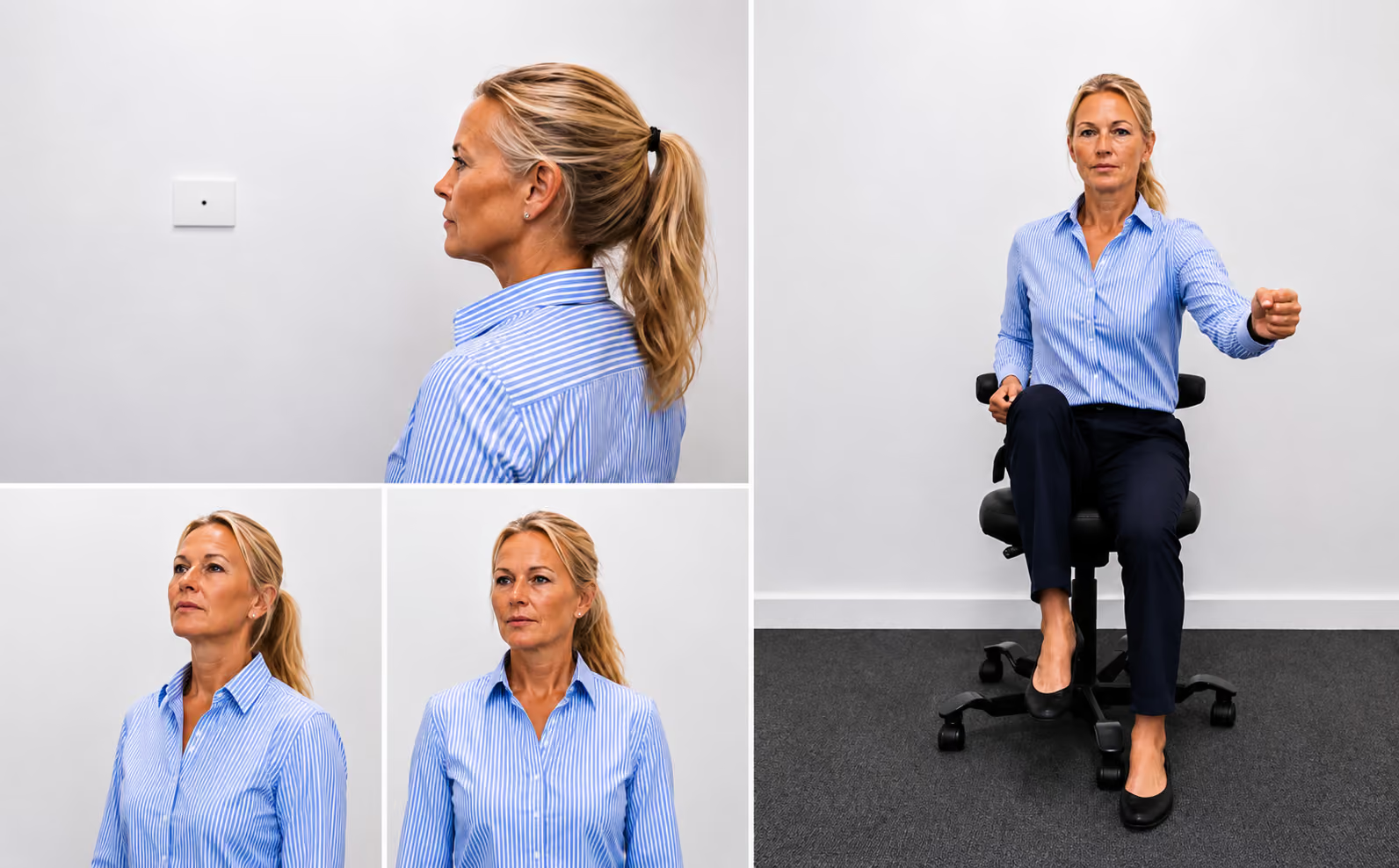
VRT includes exercises where you keep your gaze on a point and make controlled head movements in specific directions.
What diseases and injuries can benefit from VRT?
Vestibular rehabilitation is currently used for a number of neurological and vestibular conditions. Research shows documented effectiveness for, among other things:
Chronic dizziness
Vestibular disorders
Age-related balance problems
Concussion and post-commotio
Parkinson's disease
Multiple sclerosis (MS)
Stroke
Cerebellar diseases
Neurodevelopmental disorders
ADHD
Dyslexia
Autism spectrum disorders
Long-COVID
In many of these conditions, targeted vestibular training can help improve both motor and cognitive functions.
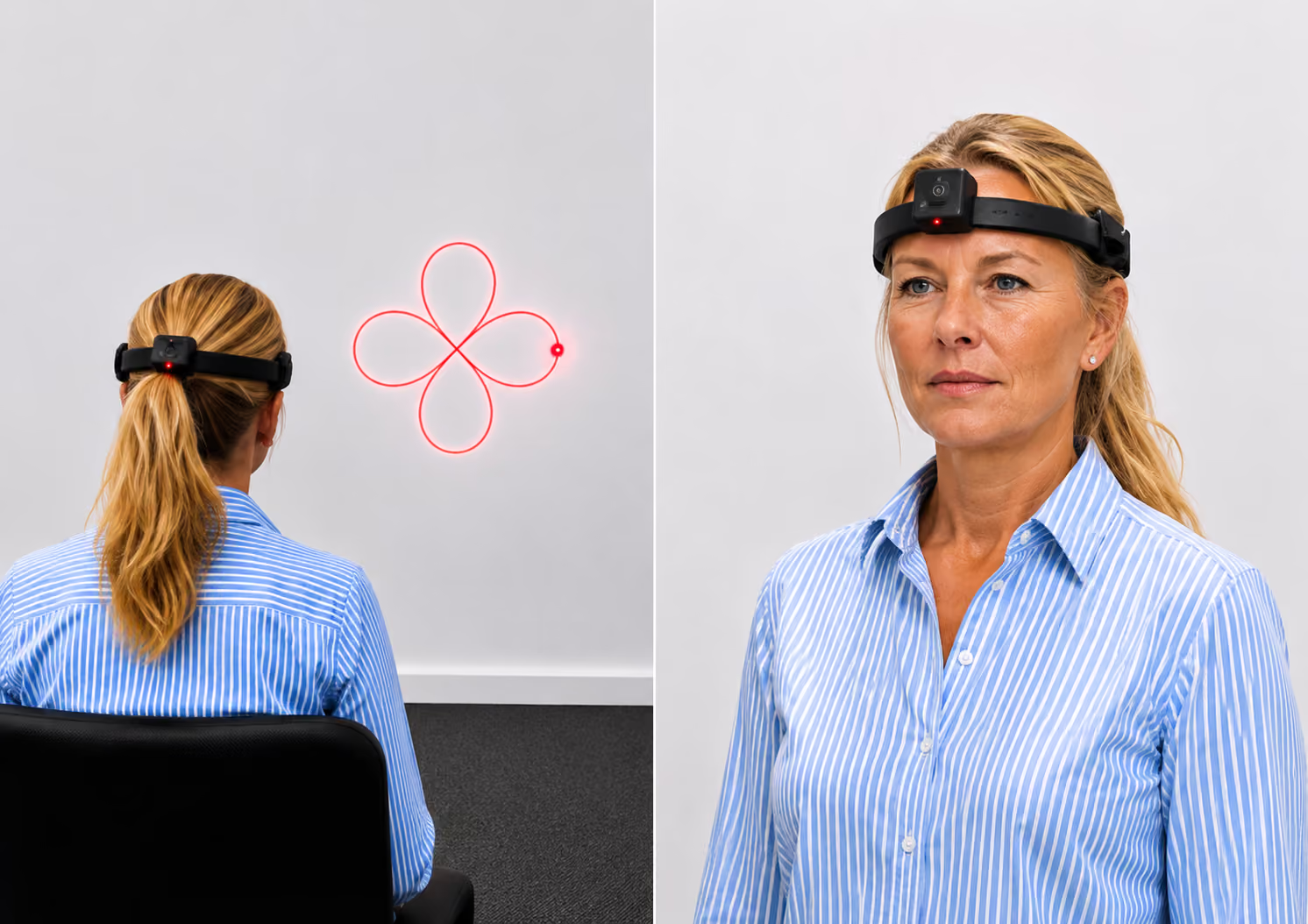
VRT trains the brain's ability to recognize neck movements and signals from the balance organ in the inner ear, while at the same time calibrating these with areas in the brain responsible for visual orientation.
How it works
What parts of the brain and nervous system are involved?
Vestibular rehabilitation activates several central brain networks responsible for stability, orientation, and precise movements.
These areas also play important roles in cognitive functions. For example, the cerebellum contributes to learning and timing, while the prefrontal cortex governs executive functions such as working memory and attentional control. When VRT stimulates these networks through targeted exercises, both motor and cognitive functions can be improved.
Gaze fixation
The ability to keep your gaze steady on a target is controlled by cooperation between the vestibular nuclei in the brainstem, the cerebellum, and the frontal eye fields in the frontal lobe. They ensure that the eyes stabilize their vision even when the head moves.
Coordinated movements
The interaction between the eyes, neck, and body involves the superior colliculus, parietal lobe, and vestibular cortex. These areas integrate information from vision and balance organs so that the body can orient itself correctly in space.
Fine-tuning and control
The cerebellum adjusts and fine-tunes movements, while the basal ganglia initiates and controls movement patterns. At the same time, the prefrontal cortex is involved in attention, decision-making, and planning movements.
How vestibular rehabilitation affects cognitive and executive functions
Although VRT is primarily known for improving balance and reducing dizziness, recent research shows that the therapy can also affect cognitive functions.
This is because vestibular signals are not only used for balance, but also to support functions such as:
- Attention
- Working memory
- Spatial orientation
- Decision-making
- Responsiveness
- Multitasking
When multisensory networks are strengthened through training, the brain can become more efficient at processing information, which can lead to improved concentration and reduced mental fatigue.
In conditions such as concussion and post-concussion syndrome, such improvements are particularly important, because many patients experience both physical and cognitive symptoms.
How VRT improves multisensory integration and responsiveness
Multisensory integration means that the brain combines information from multiple senses to create a stable experience of the body's position.
VRT exercises challenge this integration by combining:
- Head movements
- Eye movements
- Body movements
- Changes in substrate
- Tasks that require quick response
Through repeated training, the brain learns to respond more quickly and precisely to changes in the environment. This can lead to improved balance, better coordination, and increased motor responsiveness.
For many patients this means:
- less dizziness
- better stability
- increased safety in movement
- reduced risk of falls
How does Brain Camp use vestibular rehabilitation in practice?
At Brain Camp, vestibular rehabilitation is individually tailored based on the results of advanced tests of balance, eye movements, and coordination.
When test results show specific challenges, a training program is developed that targets the relevant brain networks. This may include exercises that improve:
- gaze stabilization
- balance and stability
- eye-body coordination
- responsiveness
- attention and concentration
Through regular follow-up and retesting, progress can be documented and training adjusted as needed.
This data-driven approach makes it possible to optimize rehabilitation based on how the brain actually works – not just how symptoms are experienced.
Why is targeted vestibular training important?
Many symptoms related to dizziness and neurological conditions are due to reduced cooperation between the senses and brain networks.
Vestibular rehabilitation makes it possible to:
- strengthen multisensory integration
- improve coordination
- increase motor responsiveness
- improve cognitive and executive functions
- reduce symptoms such as dizziness and unsteadiness
This provides a strong foundation for lasting functional improvement.
Want to find out how vestibular training can help you?
If you experience dizziness, unsteadiness, fatigue, or difficulty concentrating, targeted vestibular rehabilitation can help improve the function of your brain and body.
Brain Camp uses modern technology and research-based methods to develop customized training programs. A structured approach to vestibular training can be an important step towards better stability, increased tolerance for activity, and improved quality of life.
Want to find out how vestibular training can help you?
Are you experiencing dizziness, unsteadiness, fatigue or difficulty concentrating? At Brain Camp, modern technology and research-based methods are used to develop tailored training programs – an important step towards better stability, increased tolerance for activity and a better quality of life.