Tailored neurological rehabilitation
We map how vision, balance, movement and cognition work together, and build an individual training program that stimulates exactly the networks in the brain that need improvement.


How all the methods work together
The brain as a whole, not a single cause
Tailored neurological rehabilitation is about understanding how the brain and nervous system function as a whole – and how different systems affect each other. When symptoms such as dizziness, headache, stiffness, pain, unsteadiness, fatigue, difficulty concentrating or reduced responsiveness occur, it is often not due to one single cause, but to reduced cooperation between several parts of the brain.
Brain Camp uses a structured, research-based approach where advanced computer-based tests map how vision, balance, movement, and cognitive functions work together. The results are then used to develop an individual rehabilitation program that stimulates specific brain networks.
This combination of mapping, targeted training and frequent re-testing makes it possible to improve function in a more precise and effective way than with standardized training programs.
Holistic approach
Why a holistic approach to the brain is important
The brain functions as a complex network of areas that constantly communicate with each other. Even a simple movement requires the cooperation of several systems:
- The visual system
- The balance organs in the inner ear
- Proprioceptive senses in muscles and joints
- Motor networks
- Cognitive and executive functions
The vestibular cortex, cerebellum, basal ganglia, parietal lobe, and prefrontal cortex are among the most central areas of this network. These structures contribute not only to balance and coordination, but also to attention, decision-making, and responsiveness.
When communication between these areas becomes less effective – for example after a concussion, in Parkinson's disease or in chronic dizziness – symptoms can arise that affect both physical and mental function.
A holistic approach makes it possible to identify which networks are affected and how these can be retrained.
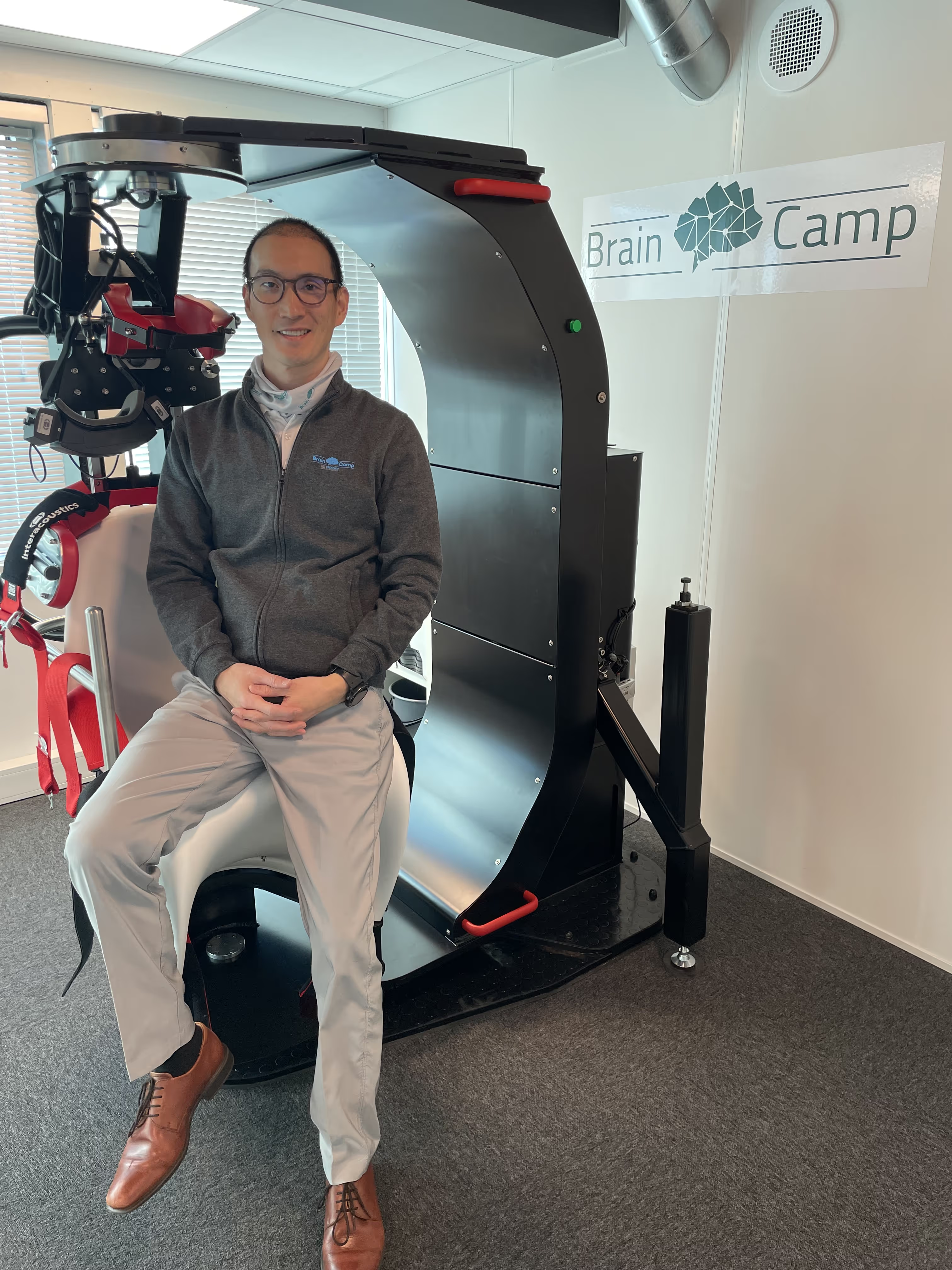
Kim from Brain camp
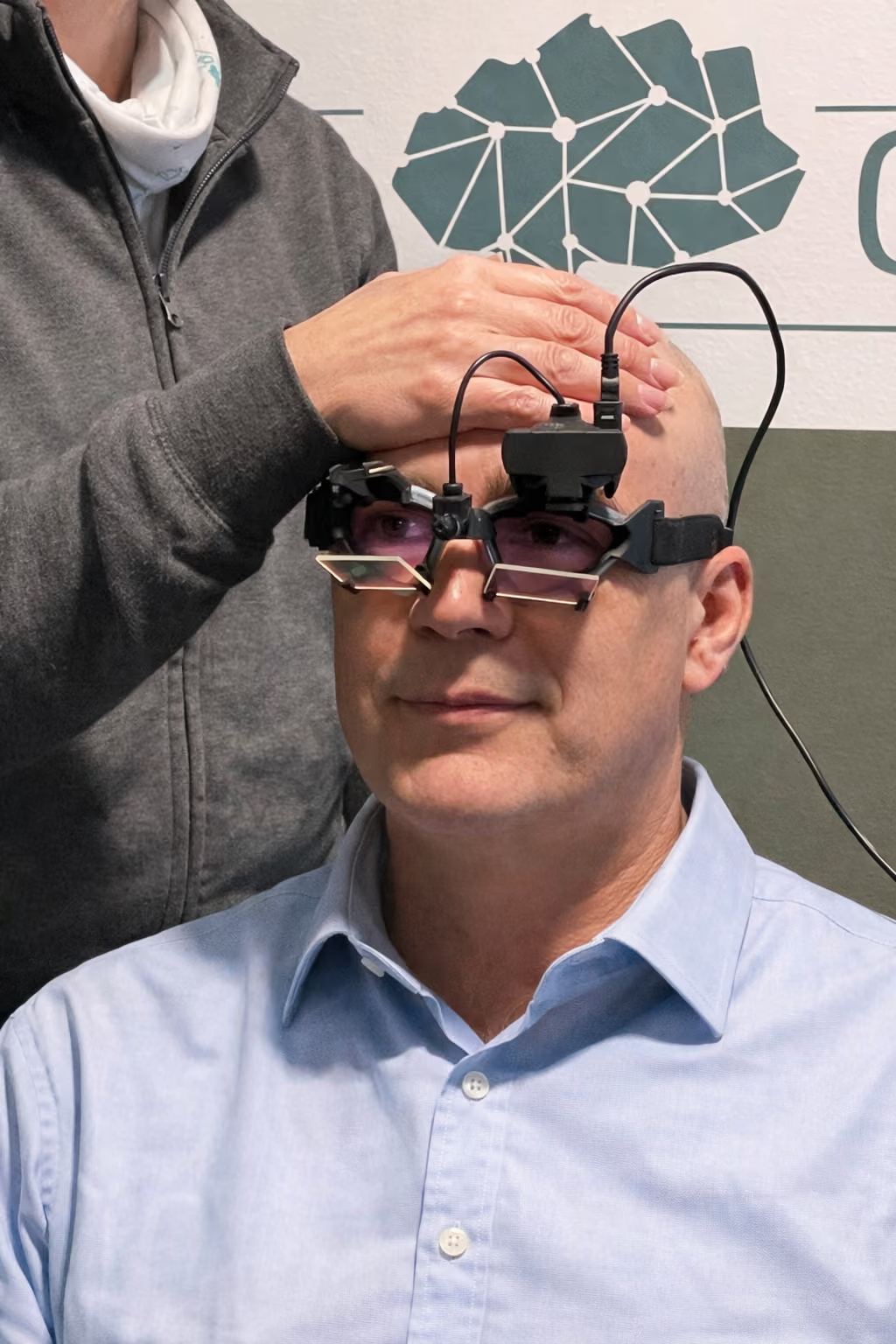
Advanced computer-based tests map function in vision, balance, coordination and cognition – the basis for an individual program.
Step 1: Mapping
How we map brain function
The basis for tailored rehabilitation is an accurate mapping of how the brain and body work together. Brain Camp uses several advanced tests, each providing insight into different parts of the brain and nervous system. The tests complement each other and provide an overall picture of function:
Video nystagmography (VNG)
Video Head Impulse Test (vHIT)
Computer-based eye-hand coordination
Computerized posturography
QEEG
Computerized Posturography
Analyzes how the body maintains stability under various conditions – including BESS (Balance Error Scoring System), Limit of Stability (LoS), tasks that coordinate neck movements with other movement signals, and functional movements such as squats. Reveals reduced multisensory integration, impaired responsiveness, impaired balance, and reduced motor control.
Read more about Computerized Posturography
VNG & vHIT
Video Nystagmography (VNG) analyzes saccades, smooth pursuit, and visual fixation. Video Head Impulse Test (vHIT) measures vestibulo-ocular (VOR) and cervico-ocular reflex (COR). Provides information about the vestibular system and vestibular nerve, brainstem, cerebellum, vestibular cortex, and frontal eye fields.
Eye-hand & eye-foot
Tests that challenge eye-hand and eye-foot coordination show how the brain translates visual signals into precise movements. Cognitively demanding tasks – response to visual signals on a touchscreen, visual memory, gaze-hand and gaze-foot – provide insight into the parietal lobe, cerebellum, premotor and prefrontal cortex.
Step 2 — Training
How targeted exercise improves brain function
Once the mapping is complete, a training program is developed that stimulates the areas of the brain that need improvement. The training may consist of several methods that work together:
Multisensory training
Combines vision, touch and movement in the same task – eye-hand coordination towards specific body parts, coordination and reaction exercises. Strengthens body recognition, coordination and mental reactivity.
Interactive Metronome
Rhythm and timing-based coordination training that improves the brain's ability to synchronize movements in time. Stimulates the cerebellum, basal ganglia, and premotor cortex, and can improve timing, reaction time, attention, and multitasking.
Advanced coordination training
Coordination exercises that gradually develop from simple to complex tasks – touch-based reaction tasks (eye-hand and eye-foot), visual memory training and coordination with multiple body parts at the same time. Strengthens both motor and cognitive functions.
Vagus nerve stimulation
Non-invasive stimulation of the vagus nerve via the ear that strengthens the balance of the autonomic nervous system and can reduce fatigue, stress and brain fog. Often included as part of a holistic program.
Photobiomodulation & HBOT
Photobiomodulation therapy and hyperbaric oxygen therapy support cellular recovery and can be combined with active training to improve function and recovery.
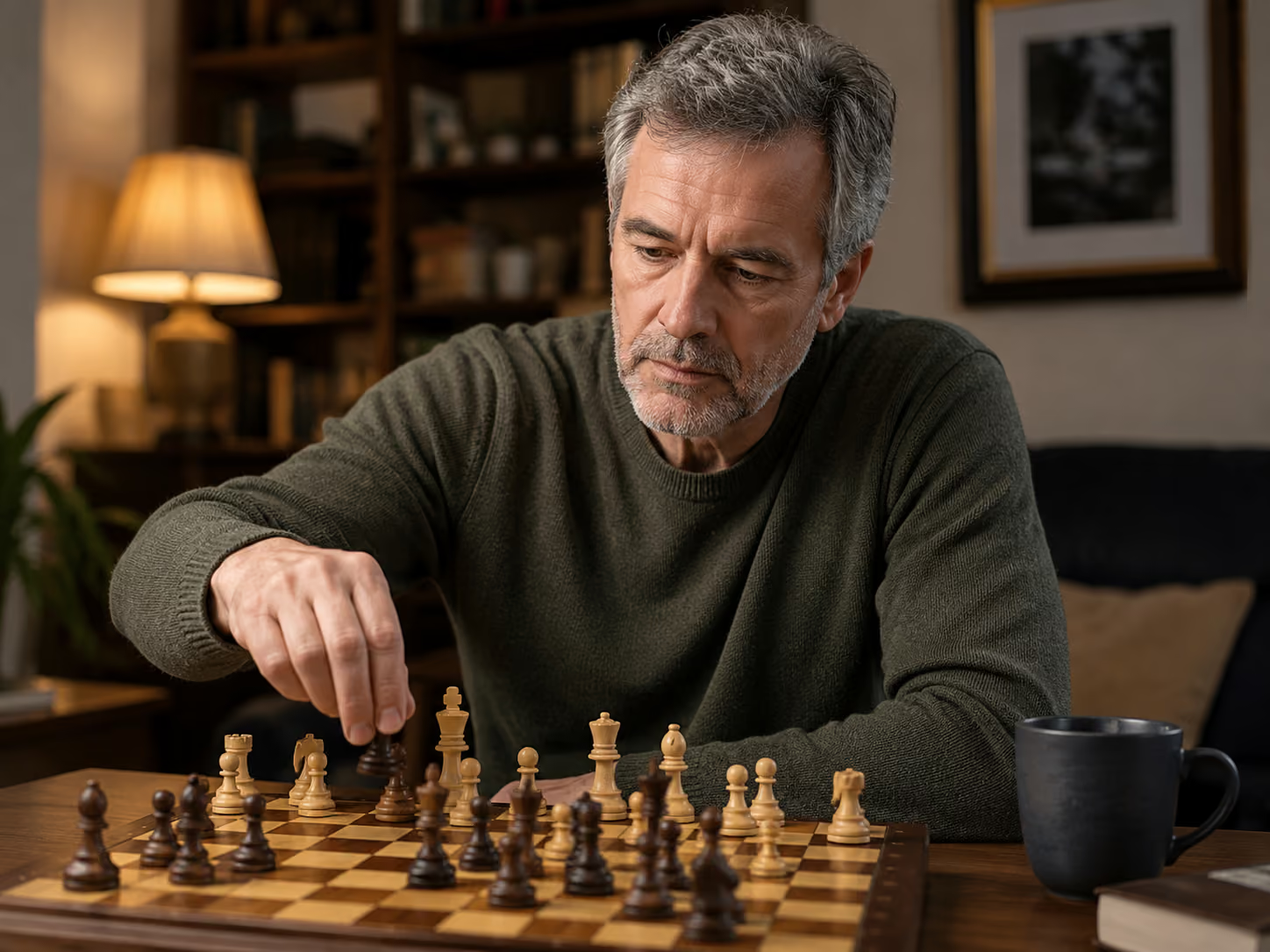
Cognitive effect
How exercise improves cognitive and executive functions
Many of the brain's movement systems are closely connected to areas that control thought processes. For example, the prefrontal cortex contributes to planning and decision-making, the cerebellum to timing and learning, and the parietal lobe to spatial orientation.
When these networks are stimulated through targeted training, several functions can be improved:
Attention, working memory, decision-making, responsiveness, and multitasking
Which symptoms can be improved?
Tailored neurological rehabilitation can help improve a variety of symptoms. Common symptoms include:
Dizziness
Unsteadiness
Headache
Pain in the back, neck and jaw joint
Fatigue/exhaustion
Impaired cognitive/executive capacity
Reduced responsiveness
Coordination problems diseases
Reduced balance
Sensitivity to sensory input
The symptoms often occur with: Concussion and post-concussion syndrome Parkinson's disease Multiple sclerosis Stroke Chronic dizziness Neurodevelopmental disorders Long-COVID
Would you like to know more about what we can offer you?
Contact us for more information about customized neurological rehabilitation. We combine advanced mapping with targeted, individually tailored training to improve function in both the brain and body.