Vagus nerve stimulation
Non-invasive training of the body's most important regulatory nerve. Transcutaneous vagus nerve stimulation (tVNS) can strengthen the balance of the autonomic nervous system and reduce fatigue, stress, dizziness and brain fog.


What is vagus nerve stimulation?
The body's most important regulatory nerve, trained via the ear
The vagus nerve is one of the body's most important lines of communication between the brain and the rest of the body. It plays a crucial role in regulating the autonomic nervous system, which controls functions such as heart rate, breathing, blood pressure, digestion and stress response. When this regulation is not working optimally, symptoms such as fatigue, reduced tolerance to activity and stress, restlessness, sleep problems, palpitations, difficulty concentrating and brain fog can occur.
Vagus nerve training with transcutaneous vagus nerve stimulation (tVNS), such as Neurosym, is a non-invasive method that stimulates sensory fibers in the vagus nerve via the ear. The signals are transmitted to the brainstem and affect central networks that regulate autonomic, motor, and cognitive functions.
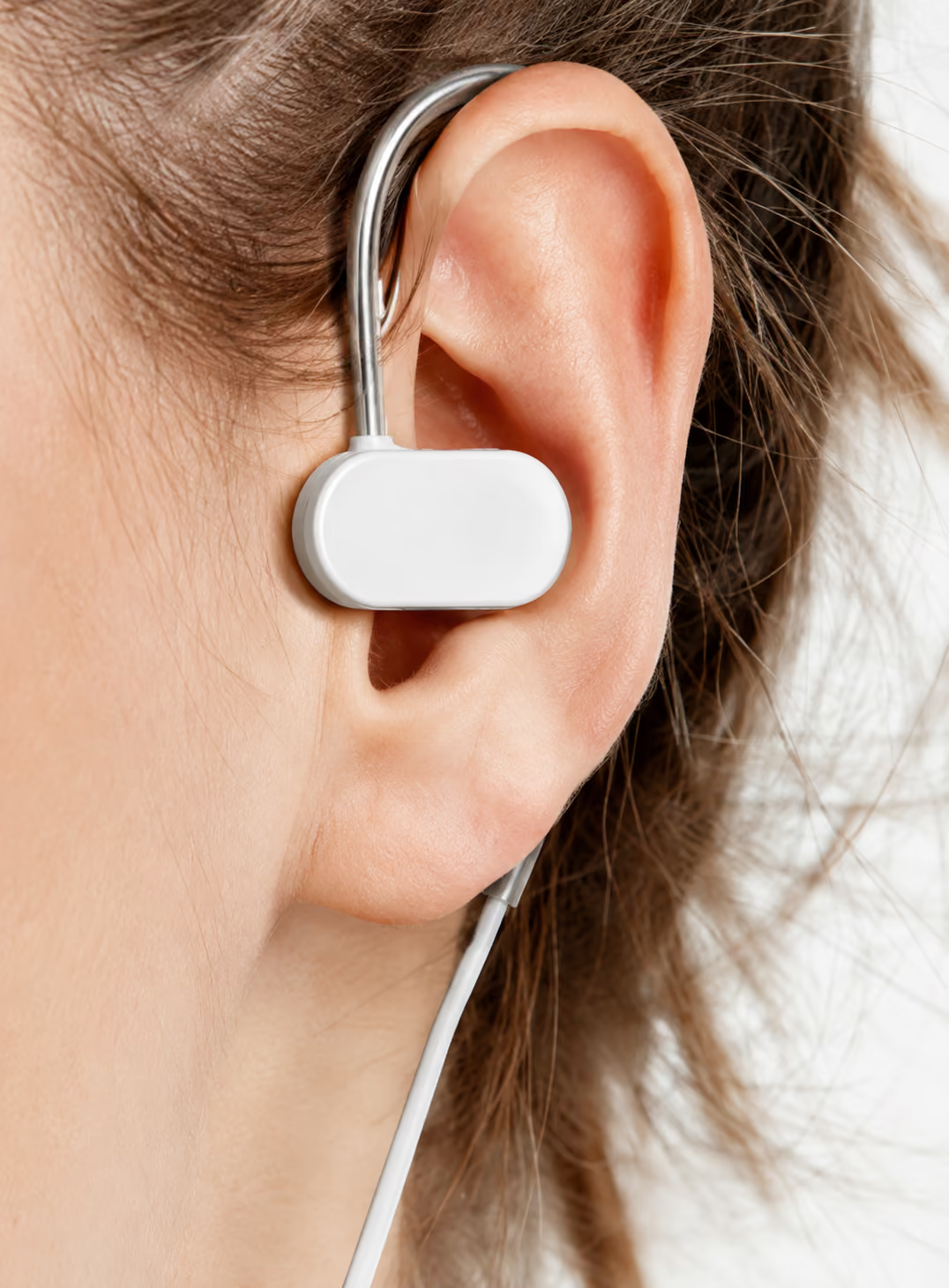
The Neurosym tVNS device attaches to the ear and stimulates sensory fibers in the vagus nerve – completely non-invasively.
Which symptoms can be improved?
Research shows that targeted stimulation of the vagus nerve can contribute to better:
Exhaustion and fatigue
Reduced physical endurance
Brain fog
Dizziness
Anxiety and restlessness
Stress and anxiety
Sleep problems
Difficulty concentrating
Decreased cognitive capacity
High sensitivity to sensory input
Chronic pain
Digestive problems
The vagus nerve is a key part of the parasympathetic system and helps balance the body's response to stress. When it is functioning optimally, the body can: Regulate heart rate and blood pressure more effectively, improve breathing patterns, reduce stress levels, improve sleep, and increase tolerance for activity. With reduced vagus activity, the body can remain in a persistent stress response, which can lead to fatigue, dizziness, and reduced cognitive capacity. Regular stimulation can help restore balance to the autonomic nervous system.
How it works
What parts of the brain and nervous system are affected?
The signals from the vagus nerve first go to the nucleus tractus solitarius (NTS) in the brainstem. From here, signals are sent on to several central structures:
Nucleus tractus solitarius
The brainstem's first receiving station for vagus signals, which distributes the information further in the brain.
Locus coeruleus
Affects attention and reaction time.
Hypothalamus
Regulates hormone balance and stress response.
Amygdala
Affects emotional regulation.
Hippocampus
Important for memory.
Insula
Contributes to body recognition.
Prefrontal cortex
Controls decision-making and executive functions.
Cerebellum & basal ganglia
Collaborates with the structures above and contributes to coordination, timing and motor control.
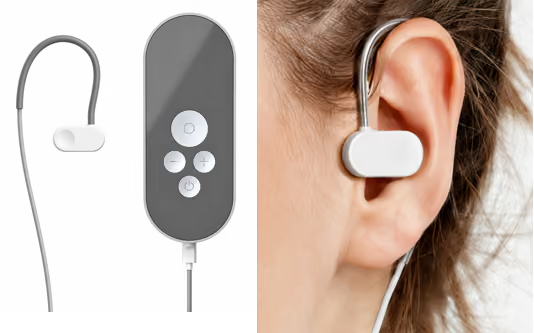
The device is controlled continuously from the remote control, so that strength and duration can be adjusted individually.
Wide scope
Affects sensory, motor and cognitive functions
The vagus nerve affects not only autonomic functions, but also networks involved in coordination and attention. Stimulation is often combined with a larger rehabilitation program to improve both regulation and active function in the brain at the same time.
Sensory functions
Can improve body recognition, sensory integration and tolerance for sensory input, through the influence of the insula and parietal areas.
Motor functions
Can contribute to improved balance, better coordination and increased responsiveness, via the cerebellum and basal ganglia.
Cognitive and executive functions
Affects attention, decision-making, working memory and mental flexibility, through the prefrontal cortex and locus coeruleus.
How can vagus nerve stimulation improve multitasking and responsiveness?
The brain must continuously coordinate information from multiple systems simultaneously. This requires efficient communication between autonomic, sensory, and motor networks.
Vagus nerve stimulation can help:
- faster reaction time
- better timing of movements
- increased ability to multitask
- improved mental stamina
This is especially relevant for people who experience fatigue or reduced tolerance to activity. These symptoms often occur in neurological diseases and functional disorders.
What diseases and conditions can be affected?
Research shows that vagus nerve stimulation can be effective for several neurological and functional conditions.
This includes, among other things:
- Chronic dizziness
- Concussion and PCS
- Traumatic brain injury
- Parkinson's disease
- Multiple sclerosis (MS)
- Stress-related disorders
- Long-COVID
In many of these conditions, reduced autonomic regulation and multisensory integration are a central part of the symptoms .
How is vagus nerve stimulation used in conjunction with other methods?
At Brain Camp, vagus nerve stimulation is used as an integral part of a larger rehabilitation program.
The stimulation is often combined with:
- vestibular rehabilitation
- multisensory training
- coordination training
- rhythm and timing exercises
- balance and reaction training
This combination makes it possible to improve both autonomic regulation and active brain function simultaneously.
Why individual adaptation is crucial
The effects of vagus nerve stimulation vary between people.
Therefore, adapt:
- strength of stimulation
- duration
- time of use
- combination with exercise
Through regular testing and evaluation, treatment can be optimized over time.
How vagus nerve stimulation can help improve stress management
Stress affects the entire body and can reduce its ability to function optimally.
By stimulating the vagus nerve, the body can:
- go from stress to recovery faster
- reduce physiological stress
- improve mental clarity
- increase tolerance for activity
This can contribute to a better balance between stress and recovery in everyday life.
Do you want to find out if vagus nerve stimulation can help you?
If you experience fatigue, dizziness, stress sensitivity, or difficulty concentrating, vagus nerve stimulation can be an important part of a comprehensive rehabilitation program.
At Brain Camp, advanced testing is combined with targeted stimulation and training to improve function in both the brain and body.
This can be the first step towards better regulation, increased energy and improved functioning in everyday life.
Do you want to find out if vagus nerve stimulation can help you?
Are you experiencing fatigue, dizziness, stress sensitivity or difficulty concentrating? At Brain Camp, advanced testing is combined with targeted stimulation and training to improve function in both the brain and body, an important step towards better regulation, increased energy and improved functioning in everyday life.